
About the Department
Introduction
The Electrical Engineering Program at the University of Prince Mugrin (UPM) is committed to preparing a new generation of engineers equipped with the knowledge, skills, and adaptability to thrive in an ever-evolving technological landscape. Grounded in academic excellence, innovation, and sustainability, the program aligns with Saudi Arabia’s Vision 2030 by empowering students to contribute to a smart and sustainable future.
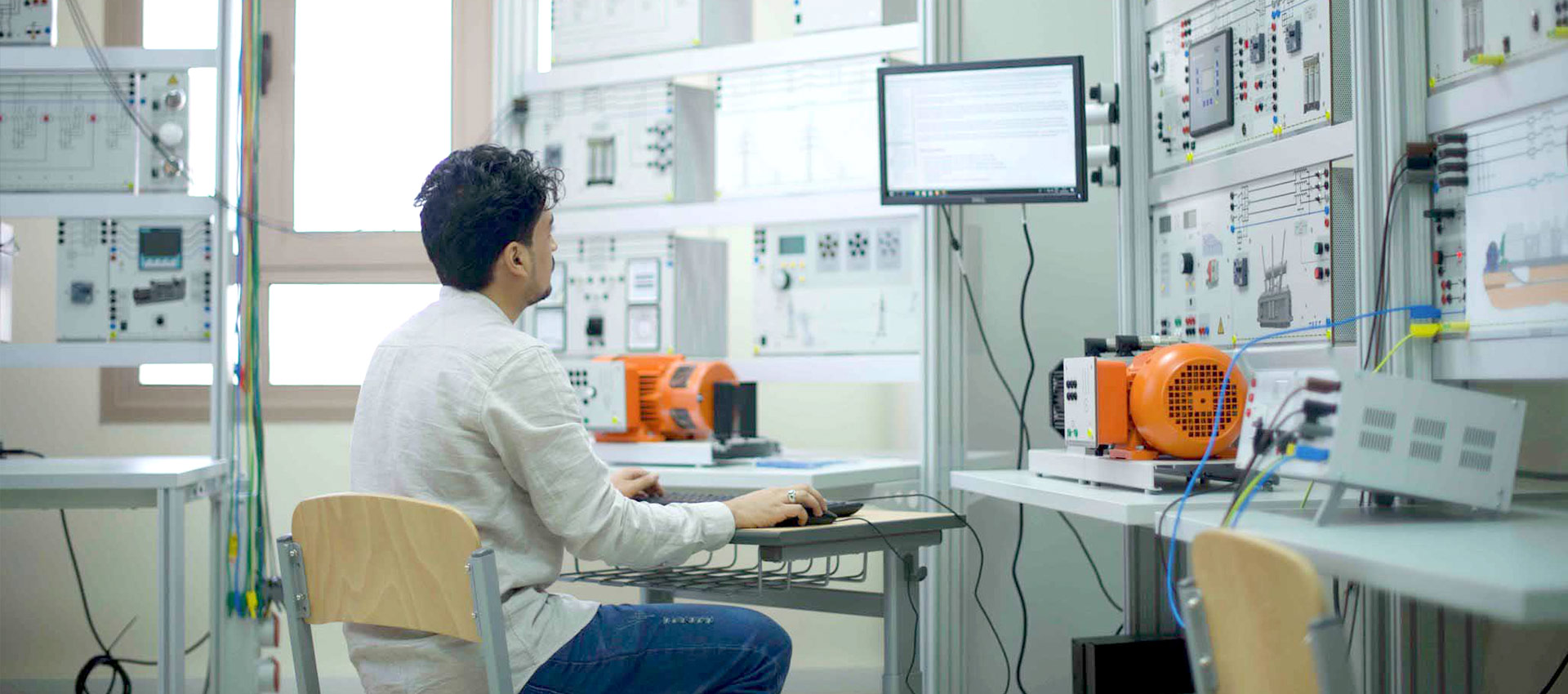
Our curriculum is designed to reflect modern industry needs and integrates the latest advancements in key areas such as Artificial Intelligence (AI) in Electrical Engineering, Power and Energy Systems, Wireless and Communication Technologies, Electronics Systems, Control and Automation with PLC, and Smart Grid applications. Through a balanced combination of rigorous theoretical instruction and hands-on, project-based learning, students gain the skills to tackle complex, real-world engineering challenges.
Since 2023, the program has achieved several significant milestones that reflect its dynamic growth and future-focused vision:
- Collaboration with Purdue University, launching a BS-UPM program in Electrical Engineering with a pathway to a master’s degree.
- Initiation of the program accreditation and quality assurance process, ensuring alignment with international academic standards.
- Revision of the EE study plan with AI integration, introducing students to cutting-edge applications of machine learning, deep learning, and intelligent systems within electrical engineering.
- Interdisciplinary projects.
- Launch of a new master’s program in smart and sustainable electrical systems.
- Joint degree program announcement with Management and Science University (MSU), promoting global academic collaboration: Bachelor of Engineering (MSU) + Bachelor of Science (UPM).
- Memorandum of Understanding (MoU) with Lucid Motors, strengthening industry ties and advancing student exposure to electric vehicle technologies and clean mobility.
Beyond technical mastery, the program cultivates leadership, critical thinking, and problem-solving skills, preparing graduates to be future-ready innovators. Our students are not only proficient in traditional EE domains, but also in emerging fields such as AI-powered smart systems, renewable energy, and sustainable technology—making them ideal contributors to the national and global engineering workforce.
Program Mission
To graduate professionals in the field of electrical engineering by providing knowledge and skills that enable them to contribute to the profession and the community.
University Requirements
Structure of the Program
Bachelor of Science in Electrical Engineering
BSEE
136
English
On-Campus
4 Years
8 Levels
15 Weeks
GPA 2.0 / 4.00
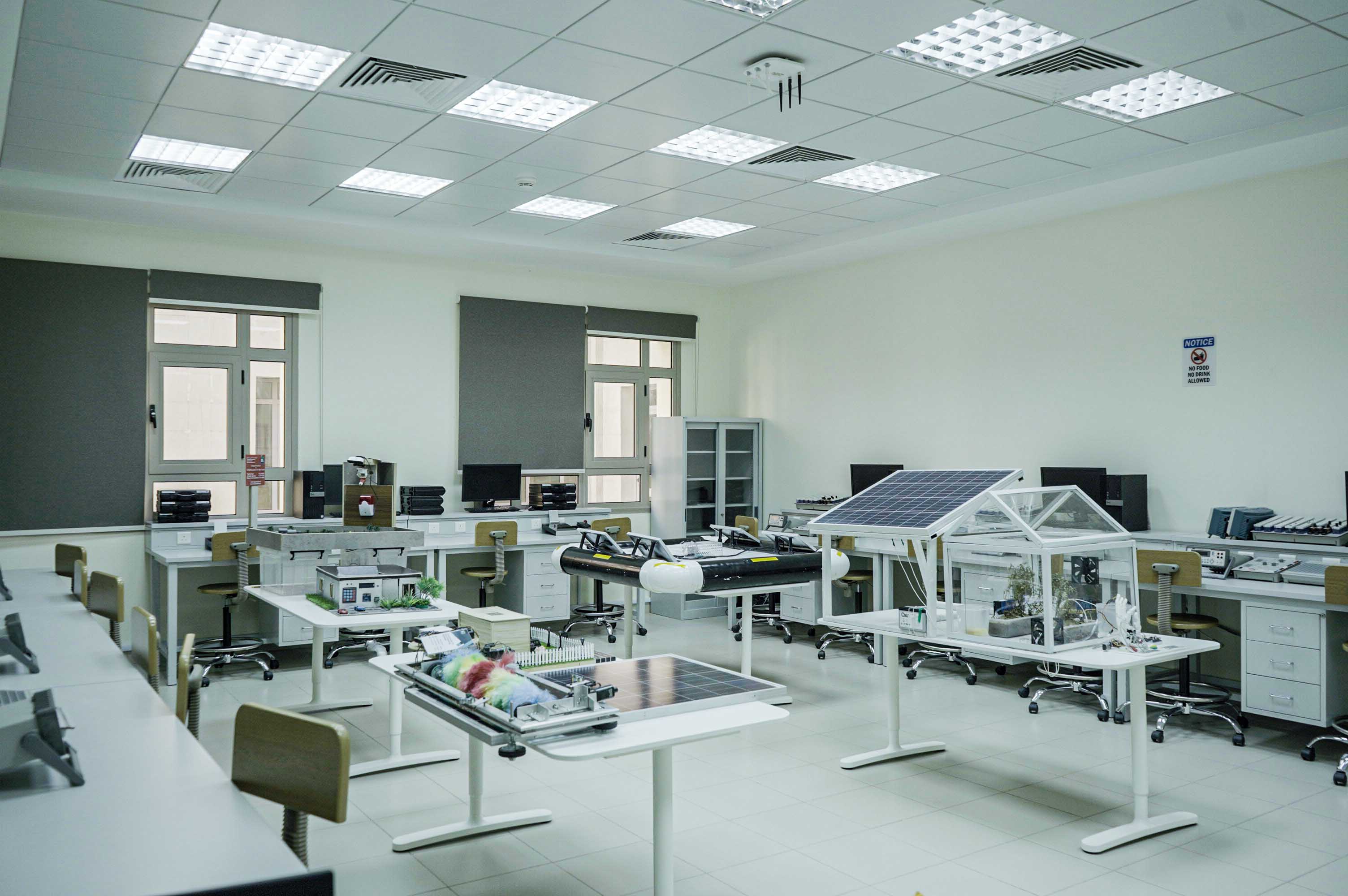
Graduation Projects of Students in the Electrical Engineering Department
PEOs
Program Educational Objectives
PEO1
Graduates of the Electrical Engineering program will have successful careers in Electrical Engineering and related fields.
PEO2
Graduates will engage in continuous learning and professional development to adapt to evolving technologies and Electrical Engineering practices.
PEO3
Graduates will exhibit a sense of ethical responsibility and awareness of the societal impact of their work.
SOs
Student Outcomes
The Electrical Engineering Program adopts the Student Outcomes (1)–(7) outlined by the EAC of ABET.
SO1
an ability to identify, formulate, and solve complex engineering problems by applying principles of engineering, science, and mathematics.
SO2
an ability to apply engineering design to produce solutions that meet specified needs with consideration of public health, safety, and welfare, as well as global, cultural, social, environmental, and economic factors.
SO3
an ability to communicate effectively with a range of audiences.
SO4
an ability to recognize ethical and professional responsibilities in engineering situations and make informed judgments, which must consider the impact of engineering solutions in global, economic, environmental, and societal contexts.
SO5
an ability to function effectively on a team whose members together provide leadership, create a collaborative and inclusive environment, establish goals, plan tasks, and meet objectives.
SO6
an ability to develop and conduct appropriate experimentation, analyze and interpret data, and use engineering judgment to draw conclusions.
SO7
an ability to acquire and apply new knowledge as needed, using appropriate learning strategies.
Curriculum
Study Plan
First Year
First Semester (Freshman)
18 Credit Hours
| Code | Course Title | CH | Pre-requisite | Co-requisite |
|---|---|---|---|---|
| MATH 101 | 4 | MATH 002 | — | |
| PHYS 101 | 4 | MATH 002 | MATH 101 | |
| CHEM 101 | 4 | — | — | |
| ENGL 101 | 3 | ENGL 005 | — | |
| CS 113 | Introduction to Python | 3 | — | — |
Second Semester (Freshman)
18 Credit Hours
| Code | Course Title | CH | Pre-requisite | Co-requisite |
|---|---|---|---|---|
| MATH 102 | 4 | MATH 101 | — | |
| PHYS 102 | 4 | PHYS 101 | — | |
| ENGL 102 | 3 | ENGL 101 | — | |
| CS 141 | 3 | — | — | |
| ENGG 103 | 1 | — | — | |
| GIAS 101 | Islamic Culture | 3 | — | — |
Second Year
First Semester (Sophomore)
17 Credit Hours
| Code | Course Title | CH | Pre-requisite | Co-requisite |
|---|---|---|---|---|
| MATH 201 | 3 | MATH 102 | — | |
| GIAS 102 | Arabic Language Skills | 3 | — | — |
| EE 201 | 3 | MATH 102, PHYS 102 | — | |
| EE 203 | 1 | — | EE 201 | |
| EE 231 | 3 | CS 141 | — | |
| EE 233 | 1 | — | EE 231 | |
| ENGL 201 | 3 | ENGL 102 | — |
Second Semester (Sophomore)
19 Credit Hours
| Code | Course Title | CH | Pre-requisite | Co-requisite |
|---|---|---|---|---|
| MATH 202 | 3 | MATH 102 | — | |
| MATH 204 | 3 | MATH 102 | — | |
| EE 202 | 3 | MATH 201, EE 201 | — | |
| EE 222 | 3 | EE 201 | — | |
| EE 224 | 1 | — | EE 222 | |
| STAT 342 | 3 | MATH 102 | — | |
| AI 283 | Introduction to Artificial Intelligence | 3 | CS 113 | — |
EE 294 – Summer Field Experience I (Optional) · 1 Credit
Third Year
First Semester (Junior)
17 Credit Hours
| Code | Course Title | CH | Pre-requisite | Co-requisite |
|---|---|---|---|---|
| MATH 301 | Advanced Mathematics for EE | 3 | MATH 202, MATH 204 | — |
| EE 313 | Applied Electromagnetics | 3 | PHYS 102, MATH 202 | — |
| EE 321 | 3 | EE 222 | — | |
| EE 323 | 1 | — | EE 321 | |
| EE 351 | 3 | EE 201 | — | |
| EE 353 | Electric Machines Lab | 1 | — | EE 351 |
| EE 341 | 3 | EE 201, MATH 201 | — |
Second Semester (Junior)
16 Credit Hours
| Code | Course Title | CH | Pre-requisite | Co-requisite |
|---|---|---|---|---|
| EE 356 | 3 | EE 351 | — | |
| EE 358 | 1 | — | EE 356 | |
| EE 326 | 3 | EE 231, EE 321 | — | |
| EE 328 | Microprocessor & Microcontroller Lab | 1 | — | EE 326 |
| ENGG 304 | 2 | — | — | |
| GHAL xxx | Humanities, Arts and Languages Elective | 3 | — | — |
| GDMC xxx | Diversity and Multiculturalism Elective | 3 | — | — |
EE 394 – Summer Field Experience II · 1 Credit
Fourth Year
First Semester (Senior)
15 Credit Hours
| Code | Course Title | CH | Pre-requisite | Co-requisite |
|---|---|---|---|---|
| EE 491 | 1 | Senior Status | — | |
| XXXX xxx | Free Elective | 3 | — | — |
| EE 461 | 3 | EE 341, MATH 301 | — | |
| EE 463 | 1 | — | EE 461 | |
| EE 471 | 3 | EE 341, STAT 342 | — | |
| EE 473 | 1 | — | EE 471 | |
| EE 4xx | Professional Elective I | 3 | — | — |
Second Semester (Senior)
15 Credit Hours
| Code | Course Title | CH | Pre-requisite | Co-requisite |
|---|---|---|---|---|
| EE 492 | 3 | EE 491 | — | |
| EE 4xx | Professional Elective II | 3 | — | — |
| EE 4xx | Professional Elective III | 3 | — | — |
| ENGG 401 | 3 | ENGG 304 | — | |
| GSOS xxx | Social Sciences Elective | 3 | — | — |
Click on a highlighted course title to view its description.
Our Team
Faculty Members
Dr. Ahsan Rahman
Head of Department / Associate Professor
Eng. Ghassan Qurban
Lab Engineer
Eng. Muath Ghazi Alsharif
Lab Engineer / Teaching Assistant
Dr. Alhussain AlMarhabi
Assistant Professor
Dr. Saleh Omar Edhah
Assistant Professor
Dr. Noura Alhazmi
Assistant Professor
Description of Courses
Download the full course description booklet for the Electrical Engineering program.